
While reviewing my travel history, I found two sets of numbers: 60,580 kilometers across China, 54 journeys, and 13 cities; beyond China, 30,601 kilometers, nine journeys, five countries and regions, and eight cities.
Numbers create an easy sense of completion. The lines on the map grow denser. The list of places gets longer. It begins to look as if I am gradually collecting the world into a résumé.
I now prefer a different interpretation: these lines record more than where I have been. They trace the ways reality kept revising what I thought I knew.
Travel is not about checking places off a list. It is about continuously revising what I imagined the world to be.
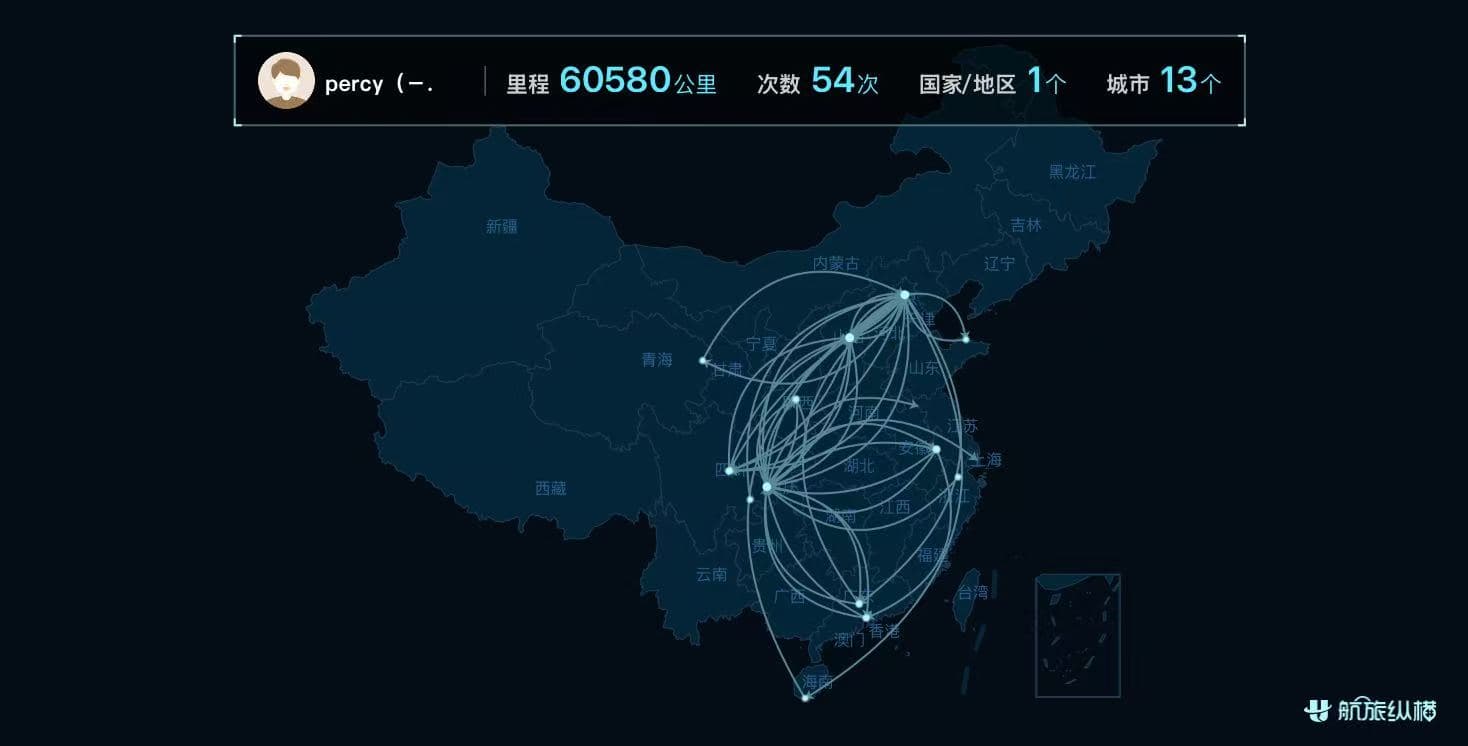
A map records distance, not the moment a prejudice begins to loosen
Before visiting a place, we already believe we know it.
That knowledge comes from news, books, films, social media, and other people's stories. The north must be one way and the south another. Large cities mean efficiency; smaller ones mean slowness. Life abroad is more open; life at home is more convenient. Famous universities are filled with geniuses. Popular landmarks must be worth reaching.
These impressions are not always false. They are simply too neat. The real world is rarely so orderly.
Moving between cities in China taught me that the same human need can have completely different local solutions. A city's character lives not only in its landmarks but in the speed of its morning commute, the distance between neighborhood shops, the way strangers speak to one another, and the number of steps required to get one small thing done.
Some places felt distant in my imagination and familiar upon arrival. Others looked dazzling in photographs but created little connection in person. I began to understand that our judgment of a place often reveals the boundary of our own experience more than it describes the place itself.
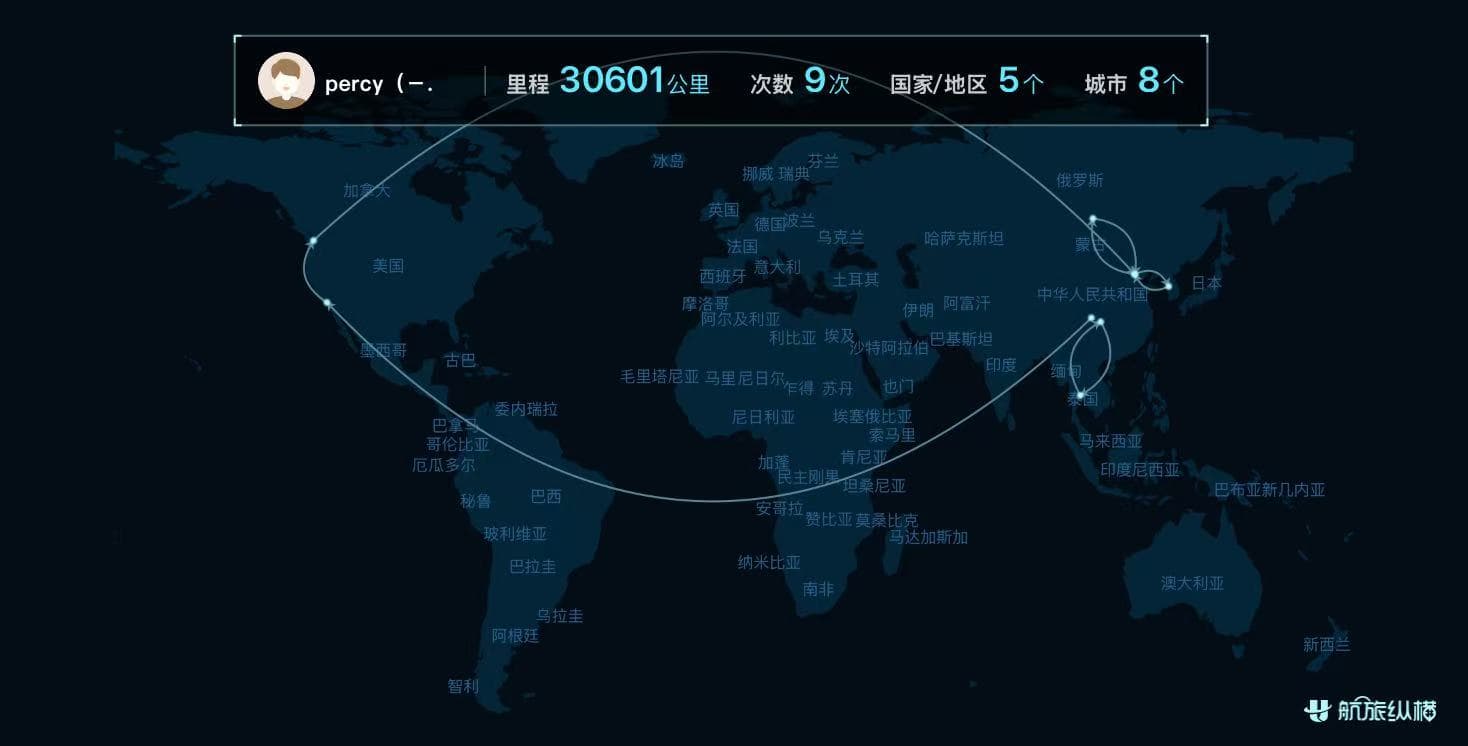
Crossing borders first changed my sense of scale
When I first traveled farther away, comparison came naturally. I compared roads, buildings, universities, companies, and services. Which were more advanced? Which were more convenient? Which should be studied and copied?
Later I realized that comparison alone remains a tourist's perspective. It compresses a complex society into a ranking and ignores the history, cost, and choices behind every form of order.
Standing on the UCLA campus, I naturally noticed its architecture, laboratories, and academic environment. But the more important question was not how famous the university was. I wondered how an environment gives young people permission to ask questions, enables people from different backgrounds to collaborate, and turns knowledge into long-term accumulation.
That observation revised my understanding of technology and innovation. Innovation is not a cluster of impressive buildings or a collection of fashionable concepts. It requires room for failure, durable institutions, open exchange, and ordinary people willing to work on one thing for many years.
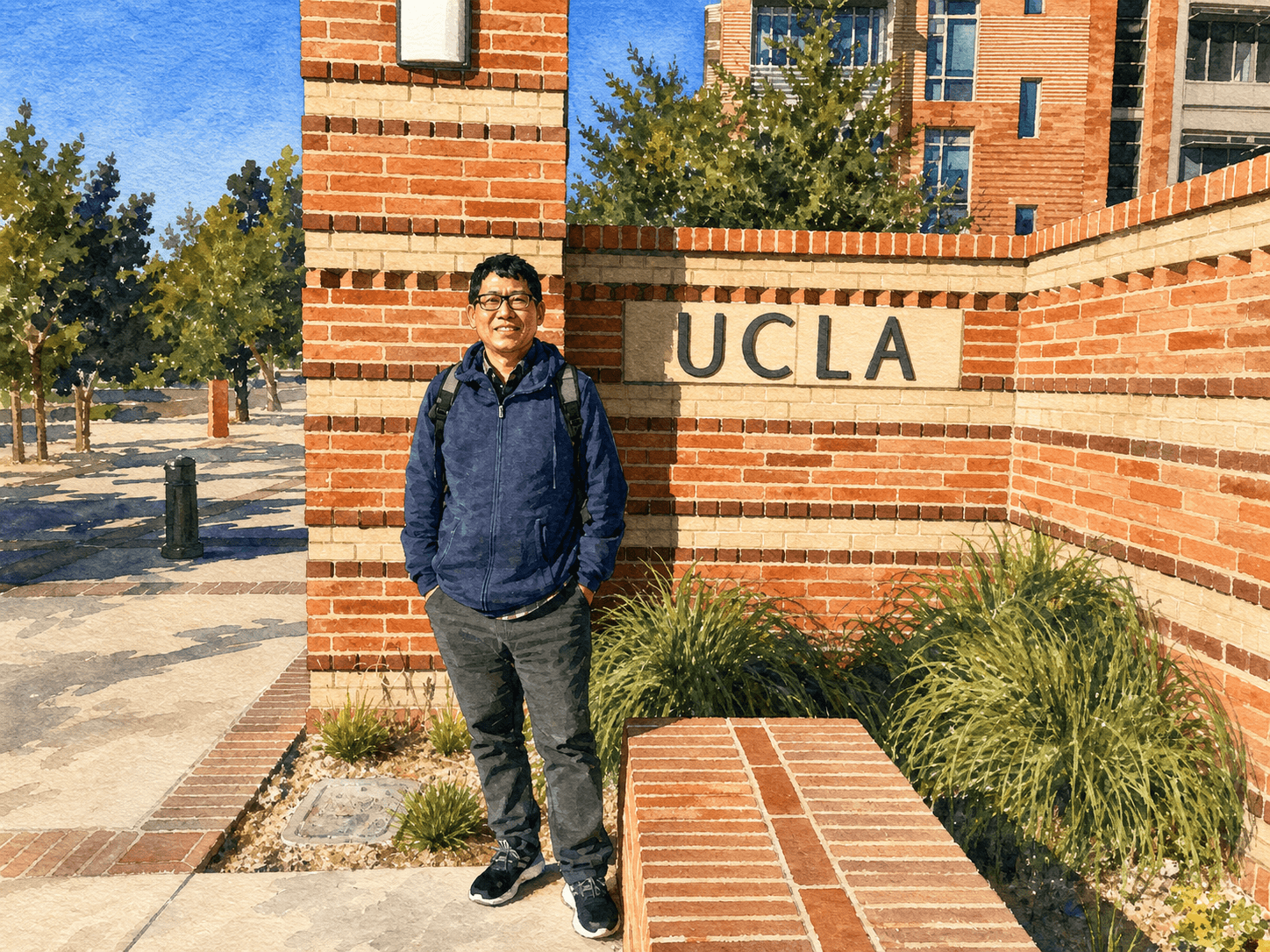
As my world grew larger, I became slower to make conclusions
Travel did not make me “well-traveled,” at least not in the way I want to describe myself. Its clearest effect was to make me suspicious of certainty.
In engineering, we abstract, model, and generalize. These abilities help me work with complex systems, but they also create an illusion: gather enough information and a subject can be understood quickly.
Travel keeps reminding me that a person's life is not an interface, a city is not a set of metrics, and a culture is not a configuration file summarized by a few keywords. Some things appear only when we move closer. Even then, we see only a portion.
So when I encounter an unfamiliar industry, a new technical direction, or someone whose experience is far from mine, I try to ask one more question: Am I looking at reality, or at the map I have projected onto it?
That hesitation is not indecision. It prevents decisiveness built on a false premise.
Who travels with me changes the memory more than the destination
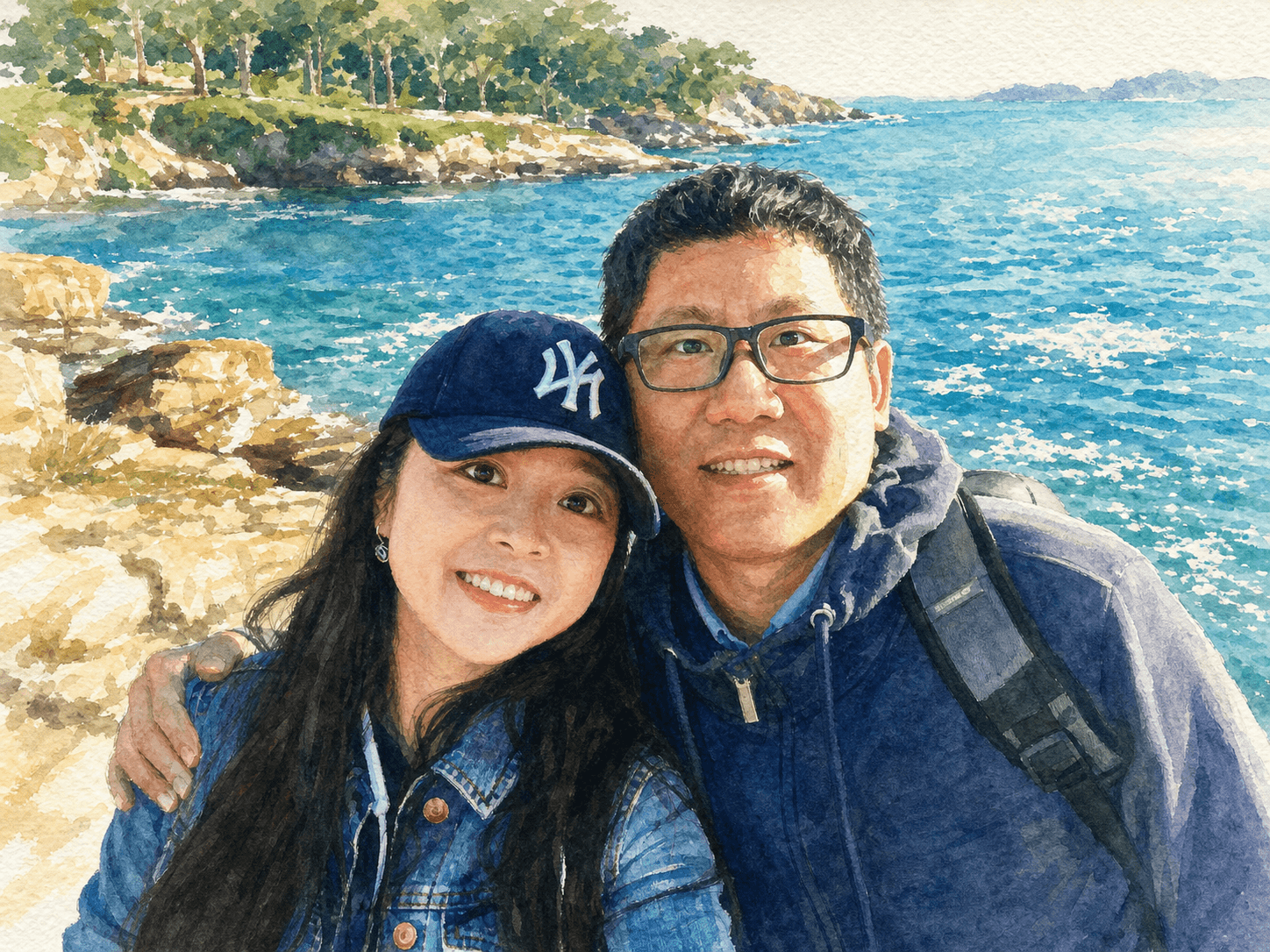
Years later, we often forget how many attractions we visited in a day. We remember the wind beside the sea, the warmth of leaning against someone, and a sentence spoken at that moment.
Travel temporarily removes us from familiar roles. Daily life surrounds us with work, family responsibilities, and schedules. In an unfamiliar place, navigation fails, weather changes, language may not work, and plans are rearranged. Inside these small uncertainties, I meet my companion again—and I meet another version of myself.
I see when I become anxious, when I become stubborn, and when I am willing to abandon a plan. I also see that a good relationship is not one in which two people always agree. It is one in which, when reality departs from expectation, both are still willing to find another route together.
I no longer define travel by having “been there”
“Been there” is too light a phrase. It may mean only that a body briefly occupied a coordinate, took a photograph, and left.
For me, the measure of a journey is what changes after I return:
- Did it overturn a judgment I had treated as certain?
- Did it make me less arrogant toward another way of living?
- Did it renew my appreciation for conveniences I had stopped noticing?
- Did it change how I build products, lead teams, or relate to people?
- Did it make me admit that the world is more complex than my experience?
If nothing changes, even a long journey may be only movement.
The reverse is also true. We do not always need to travel far. Walking attentively through an unfamiliar neighborhood, talking deeply with someone from a different background, or staying in one place long enough can also force imagination to meet reality.
The next journey is not about filling the map
I will keep traveling. I will still take photographs, save routes, and keep those numbers. There is nothing wrong with records, and landmarks are not meaningless. The mistake is to confuse a record with a gain, or arrival with understanding.
Every line on a map appears to connect one city to another. The more important movement happens inside a person: certainty loosens, unfamiliar lives become understandable, and a narrow sense of scale opens again.
So before my next departure, I do not want to ask only which place is still missing from my map.
I want to ask: What am I willing to let reality correct this time?
The world does not need to be completed by me. It asks only to be encountered again, carefully and honestly.